Alaska Airlines’ app-based baggage tracking was designed to reduce guest anxiety by giving travelers real-time visibility into where their bags are, while also helping the airline recover delayed or misplaced luggage faster. Because baggage tracking is now an industry standard, this effort focused on meeting rising customer expectations with a clear, self-service experience inside the Alaska mobile app. Beyond improving peace of mind, the initiative supported broader business goals by increasing mobile app engagement, encouraging self-service bag tagging adoption, and strengthening long-term checked-bag usage.
Year
2024
Client
Alaska Airlines
My Role
Product Designer

The Challenge
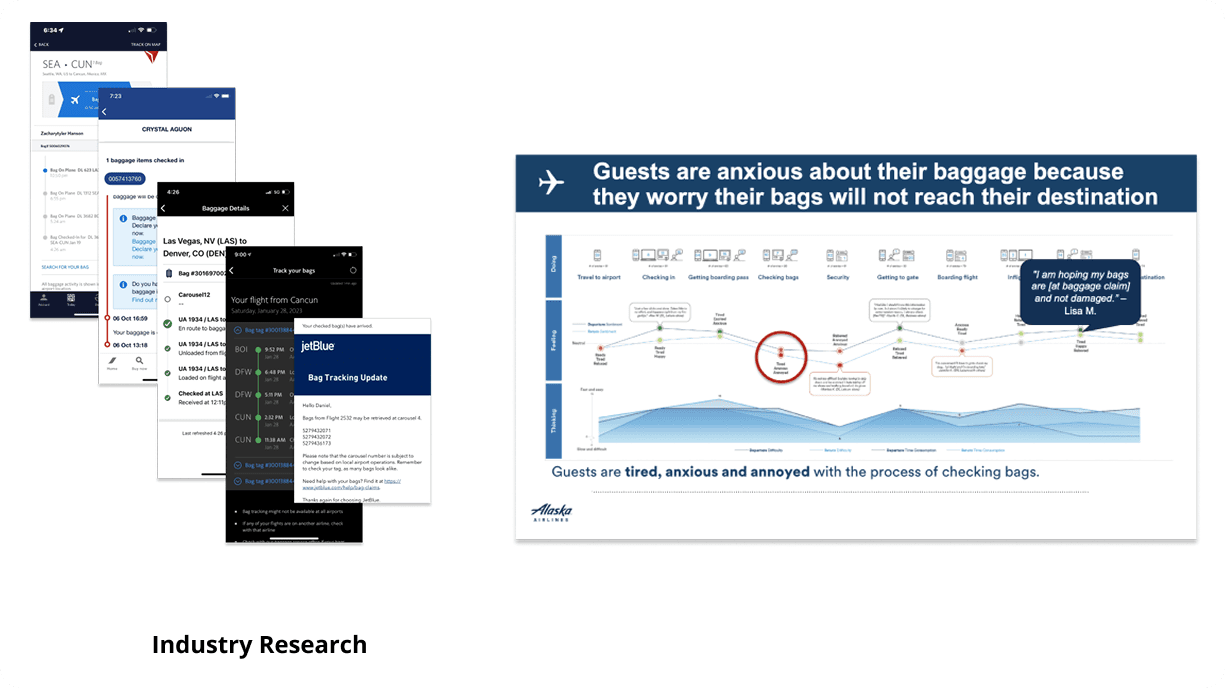
Baggage check-in and collection are consistent pain points for Alaska guests, often creating uncertainty and frustration at key moments in the travel experience. While research and internal data show that digital tools can meaningfully improve travel and that guests are willing to use the mobile app for baggage updates, Alaska’s experience needed to meet the bar set by competitors and adjacent industries that already offer in-app tracking as a standard expectation. The challenge was to design a tracking experience that reduces anxiety and improves transparency, while also supporting business outcomes like increased app adoption and engagement that can translate into long-term revenue impact.
The Approach
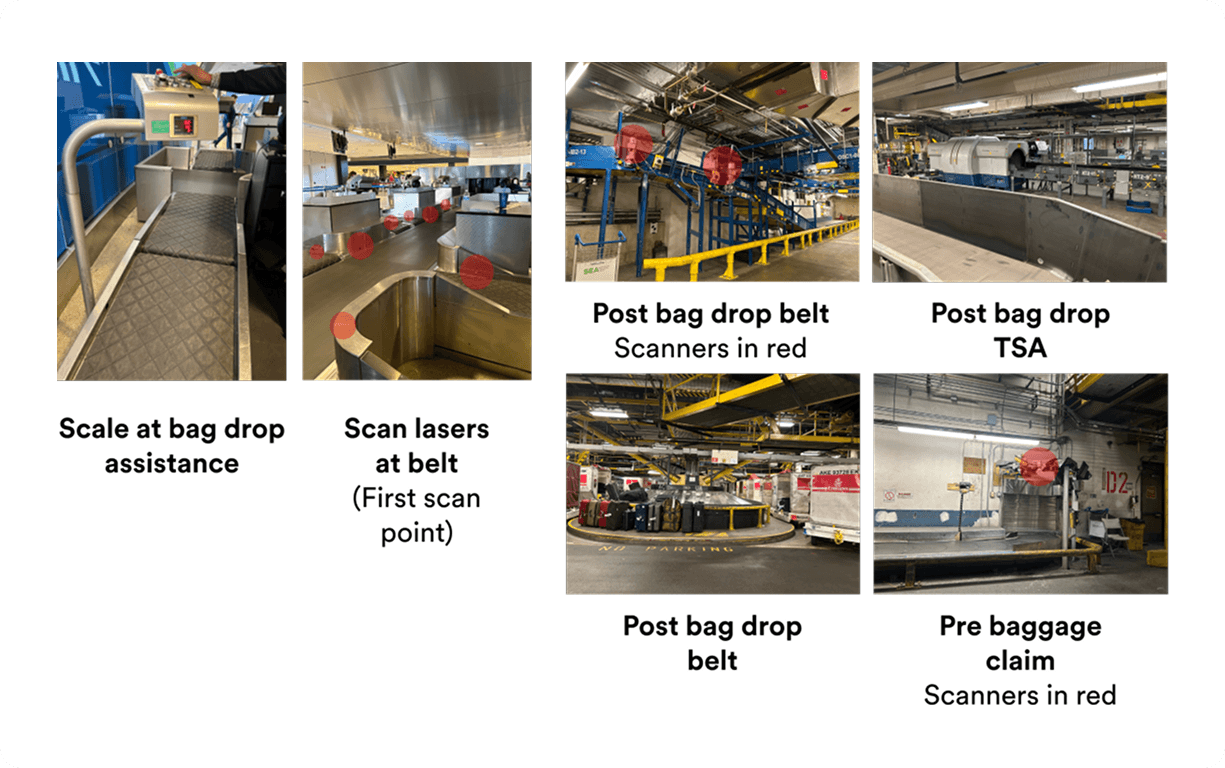
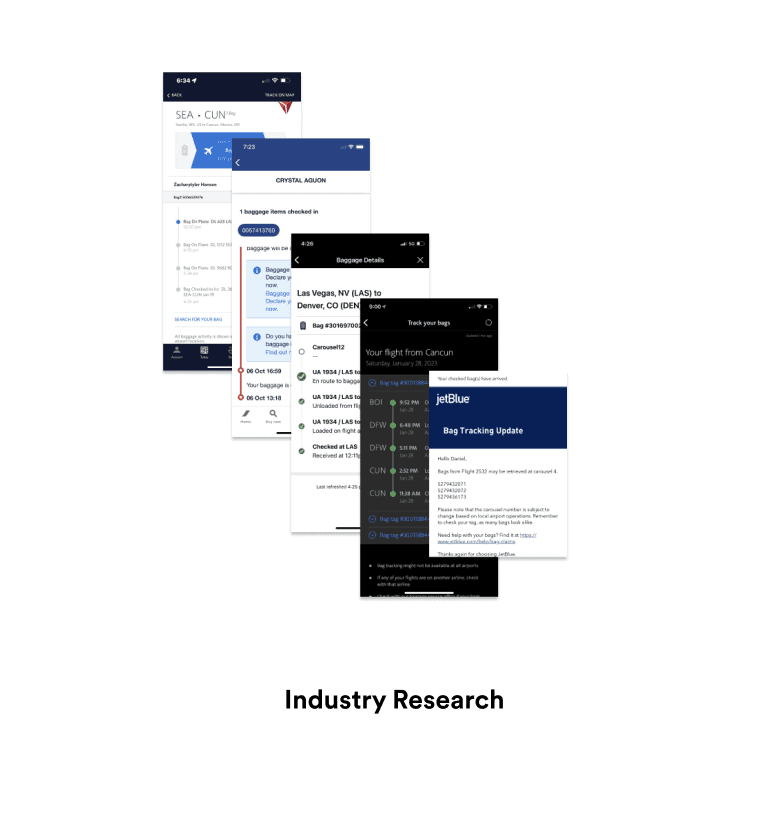
My approach combined firsthand operational research with guest and market insights to ensure the solution worked in the real world. I conducted independent contextual research by traveling to Alaska’s Seattle hub and meeting with operational specialists, agents, baggage handlers, and other internal teams to understand the baggage tracking process end-to-end and where breakdowns occur behind the scenes. In parallel, I reviewed competitor airline tracking experiences and partnered with the research team to synthesize guest pain points and expectations, helping us define what an in-app tracking solution needed to communicate, when it needed to show up, and how it could reduce anxiety throughout the journey.
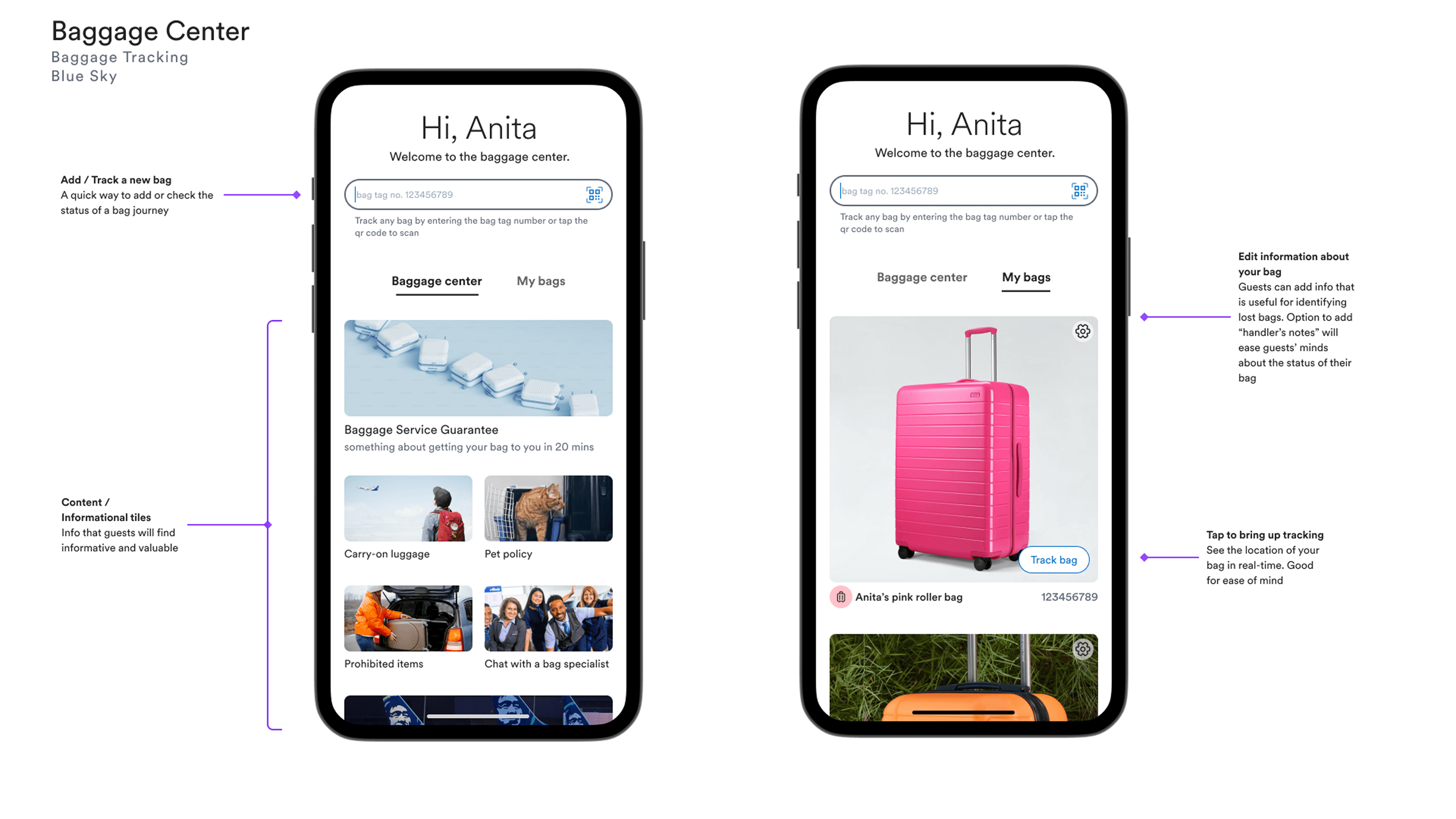
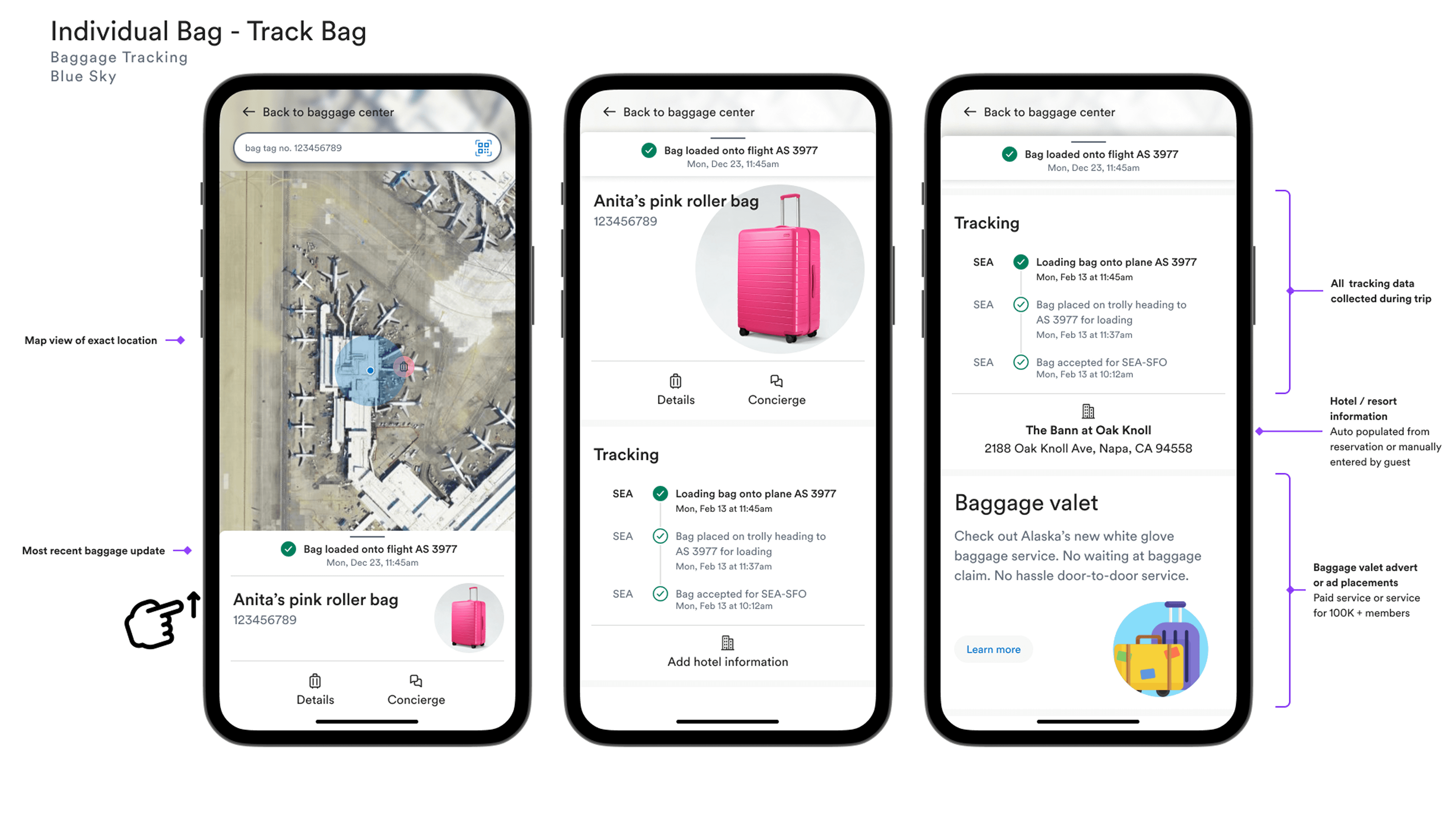

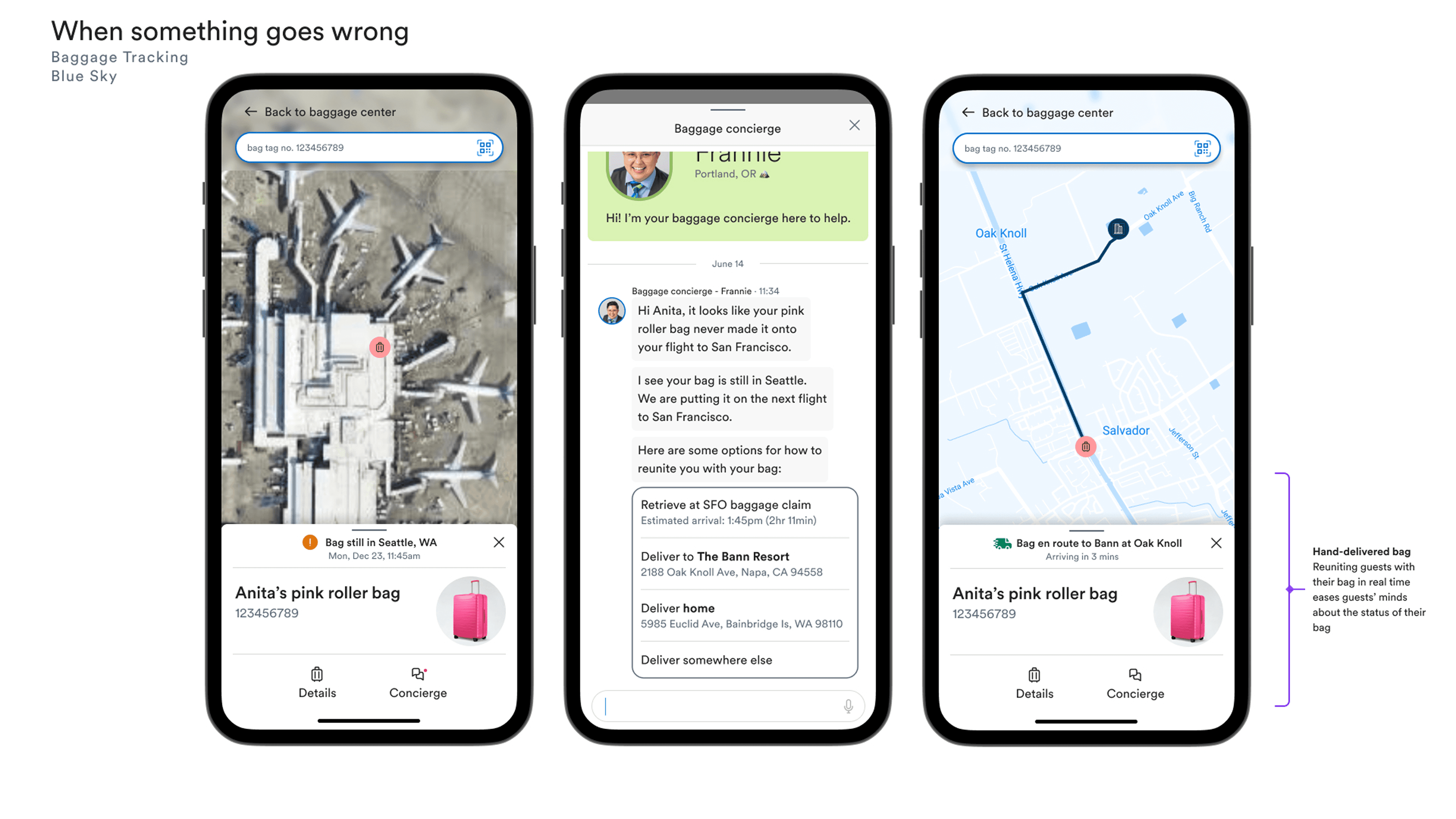
Business Constraints
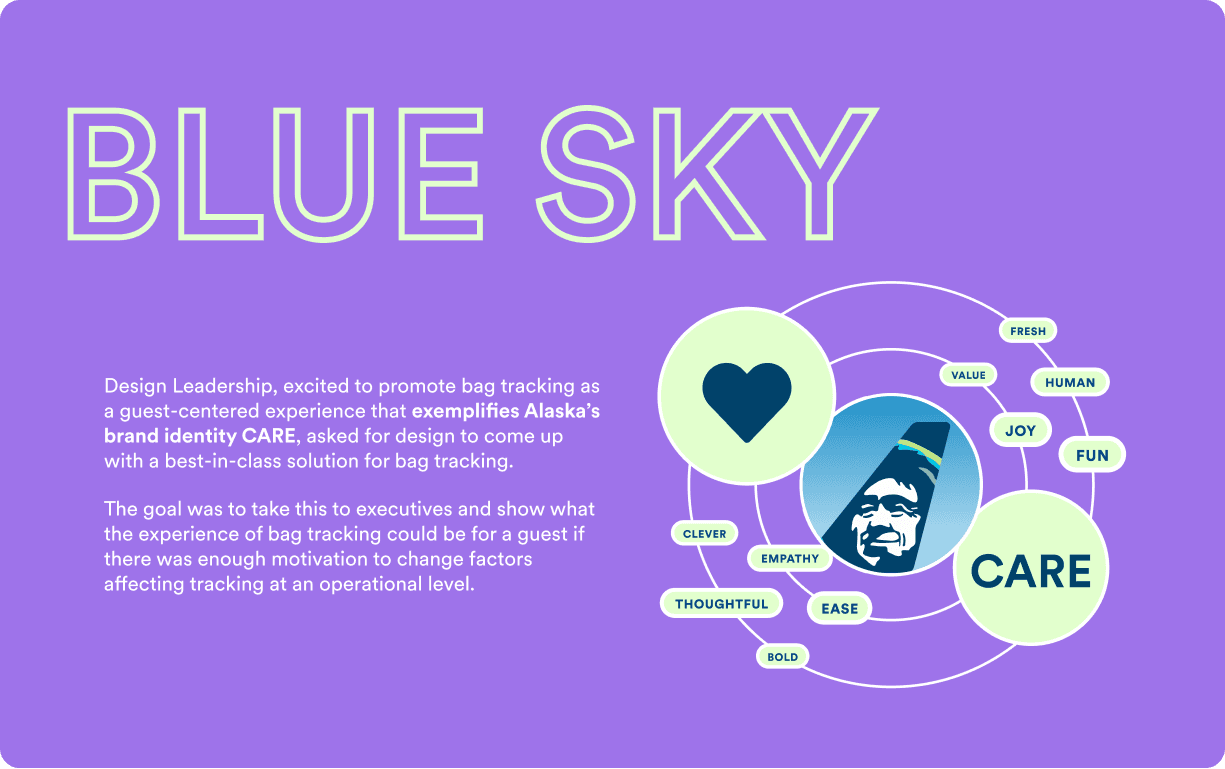
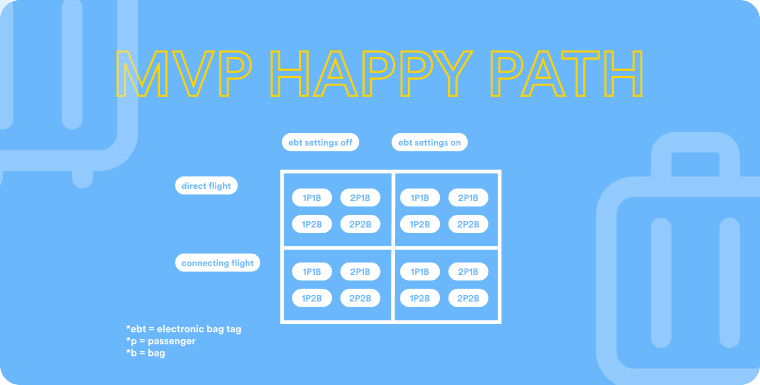
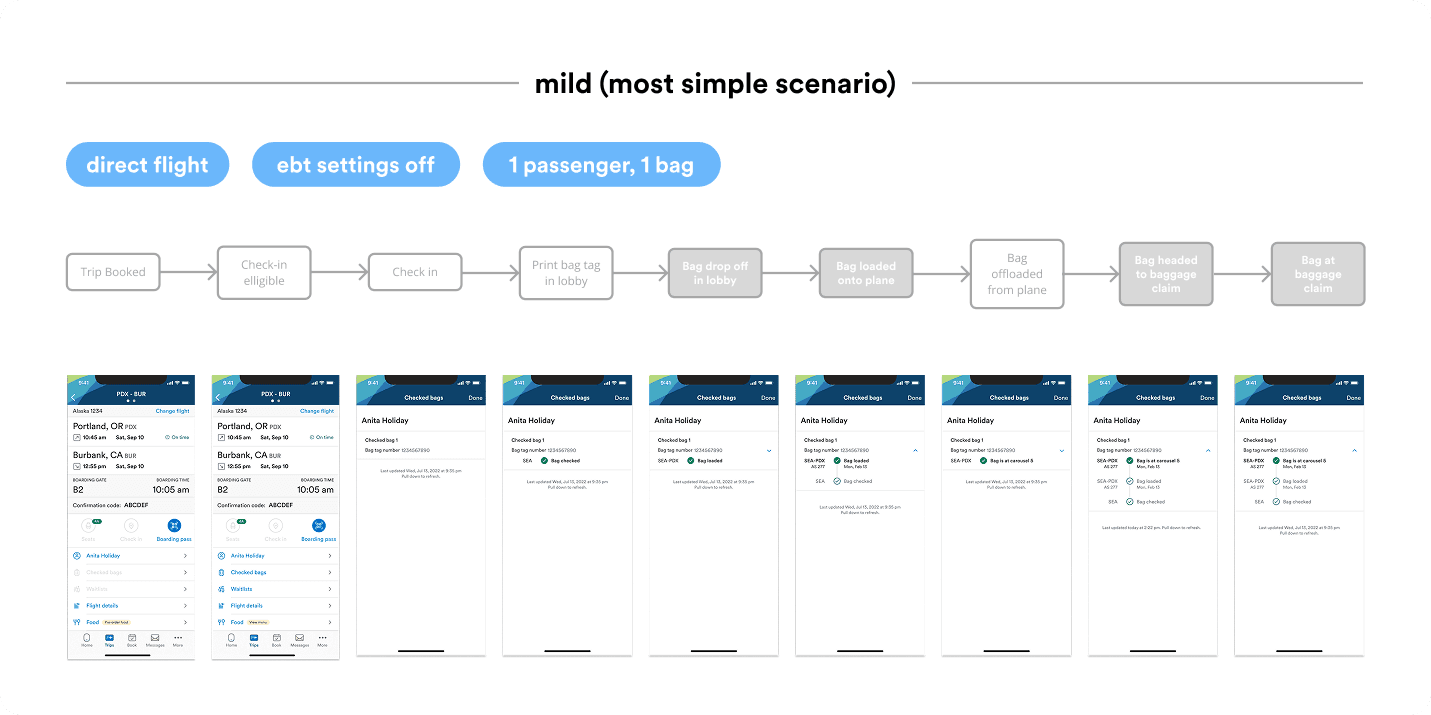
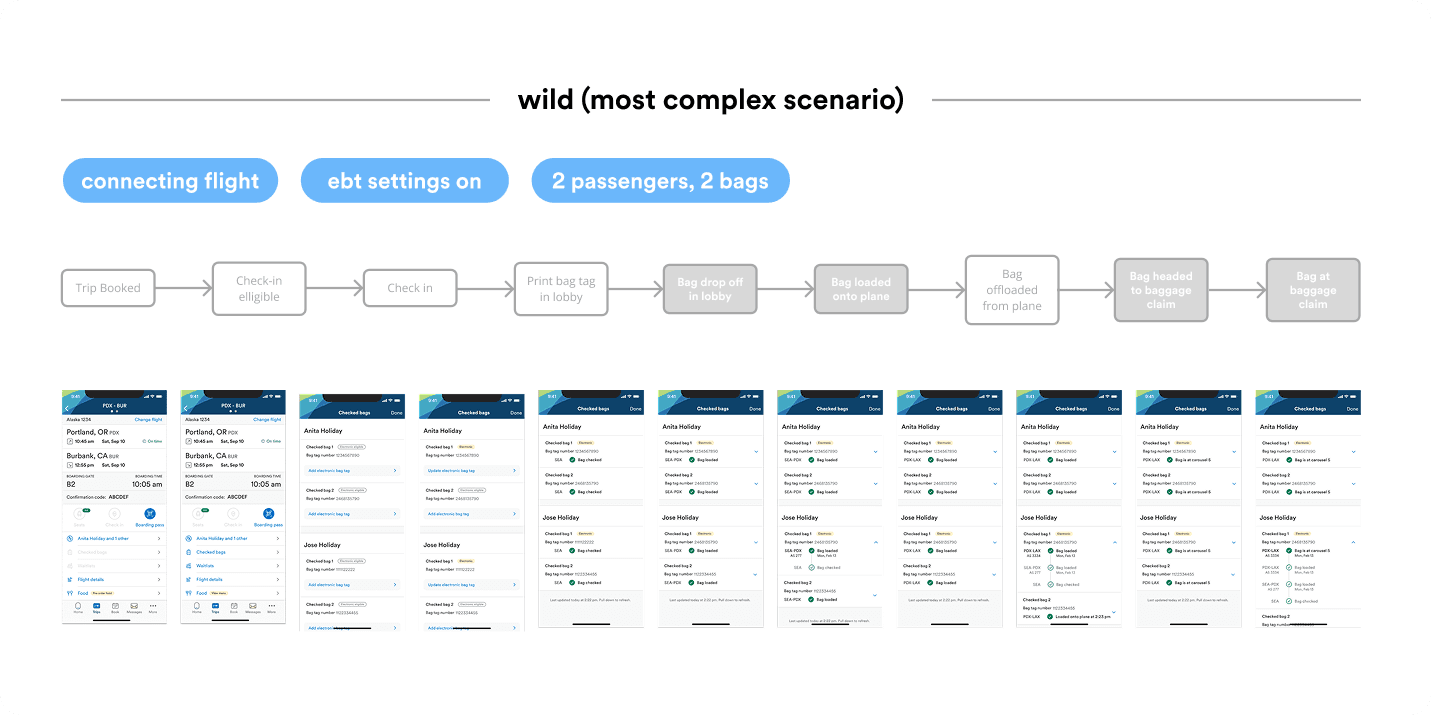
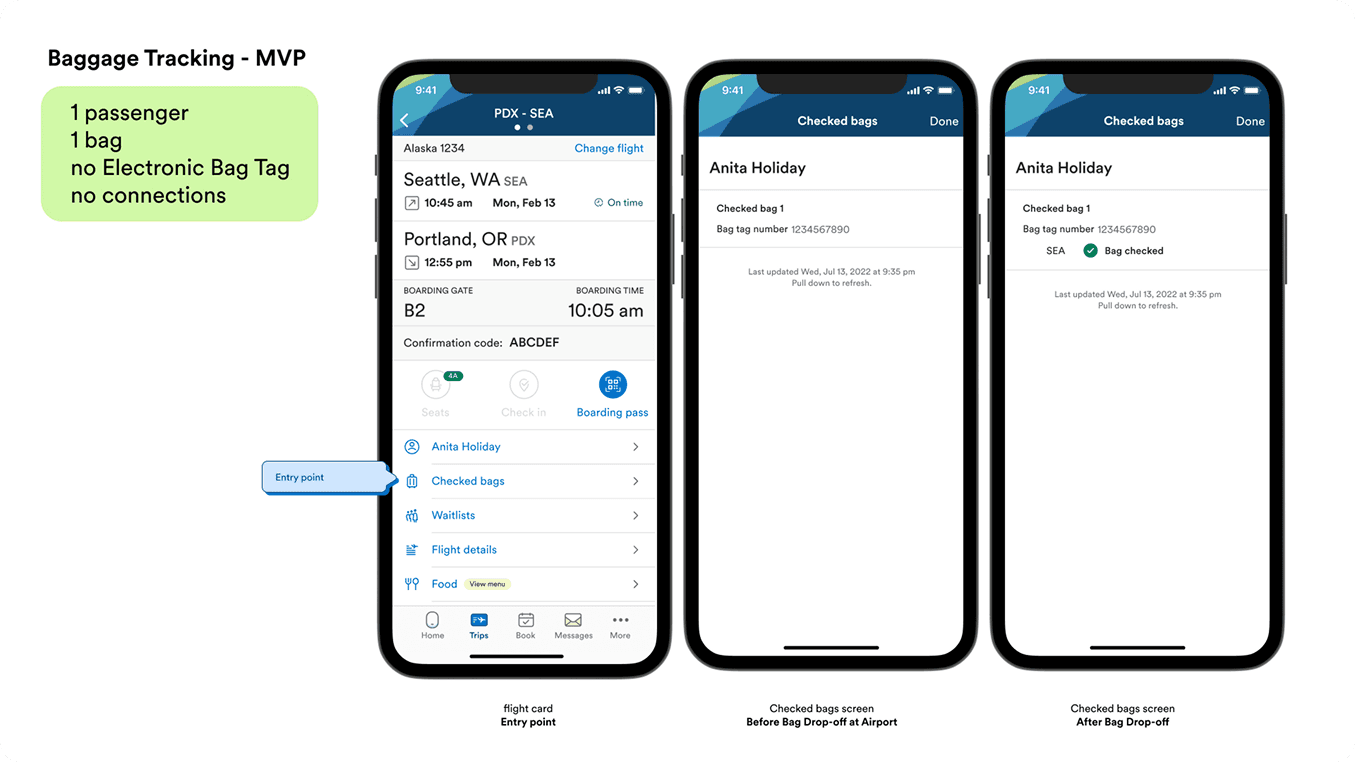
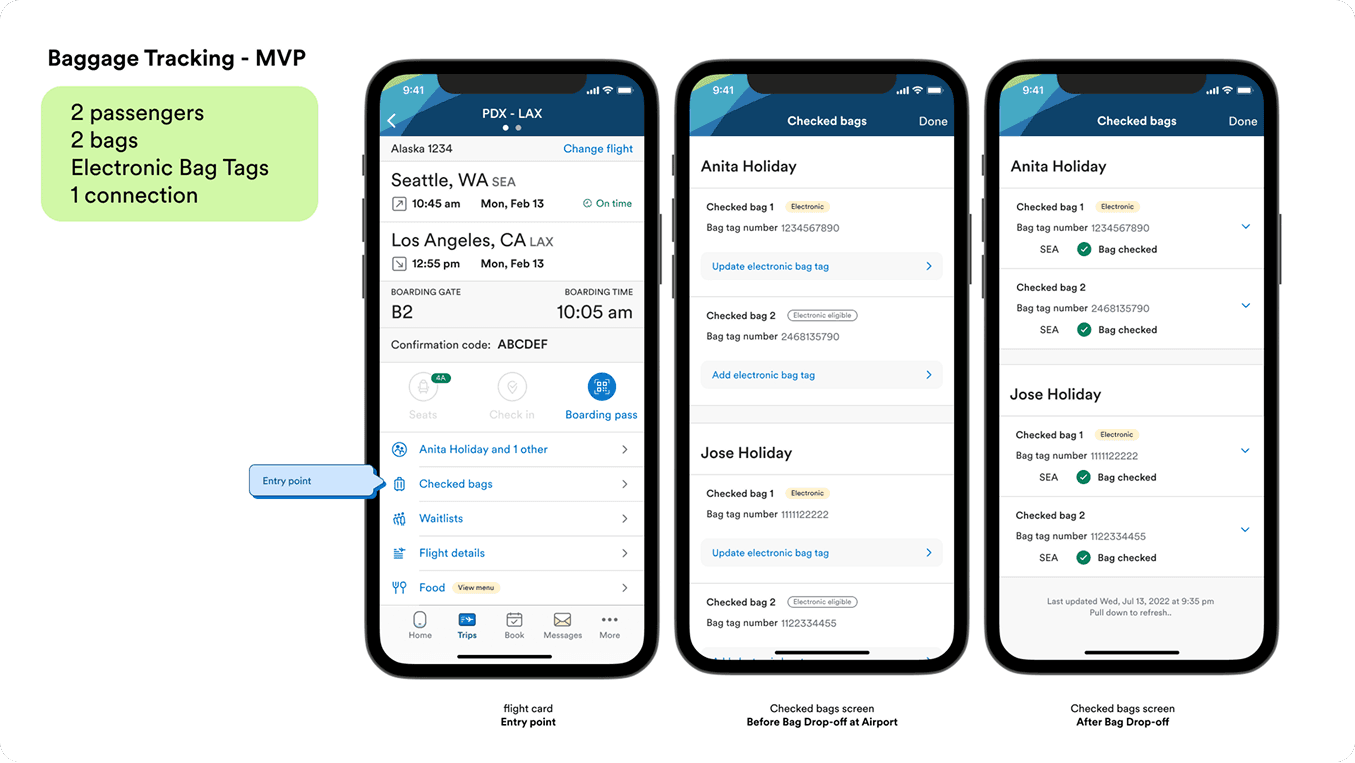
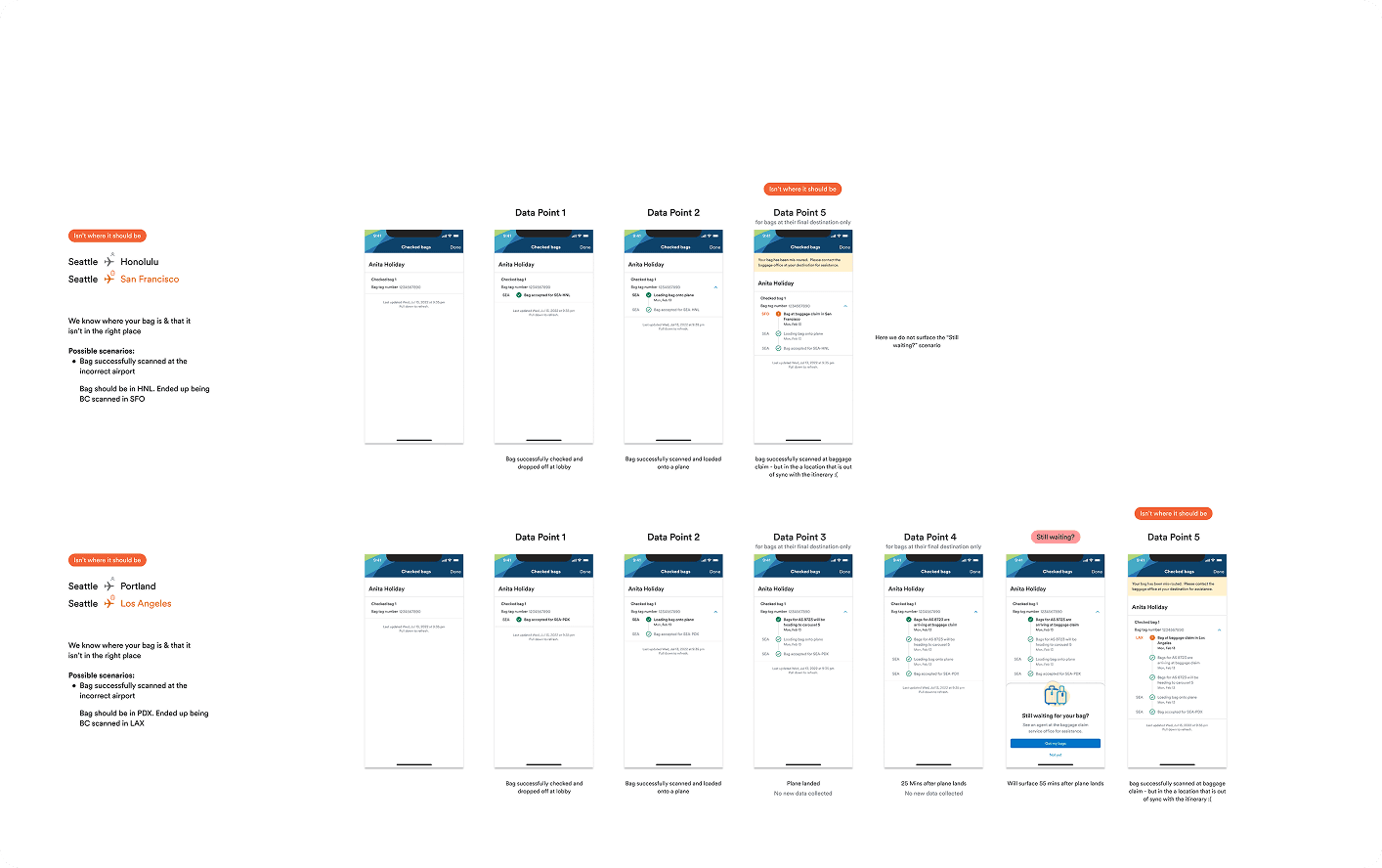
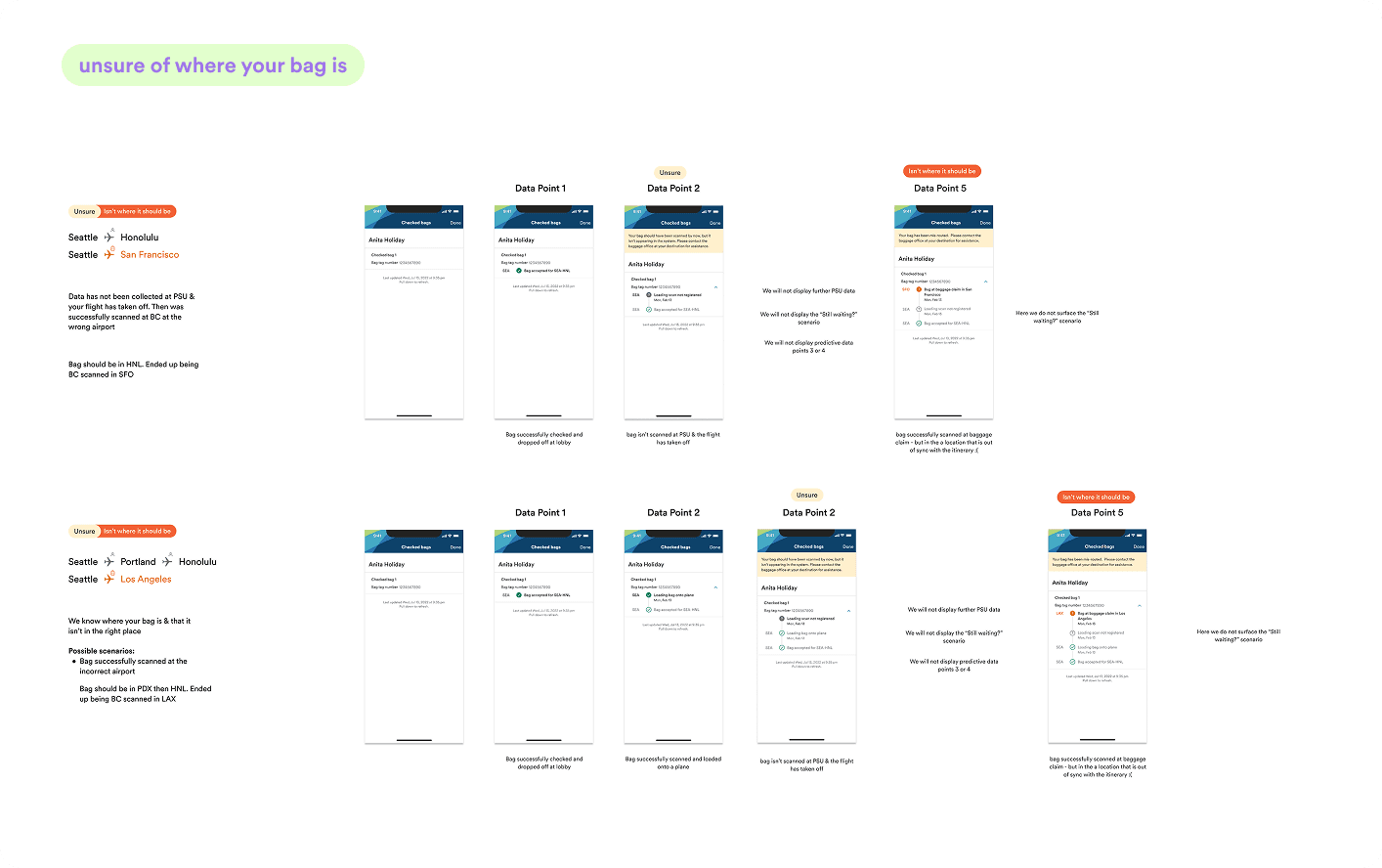
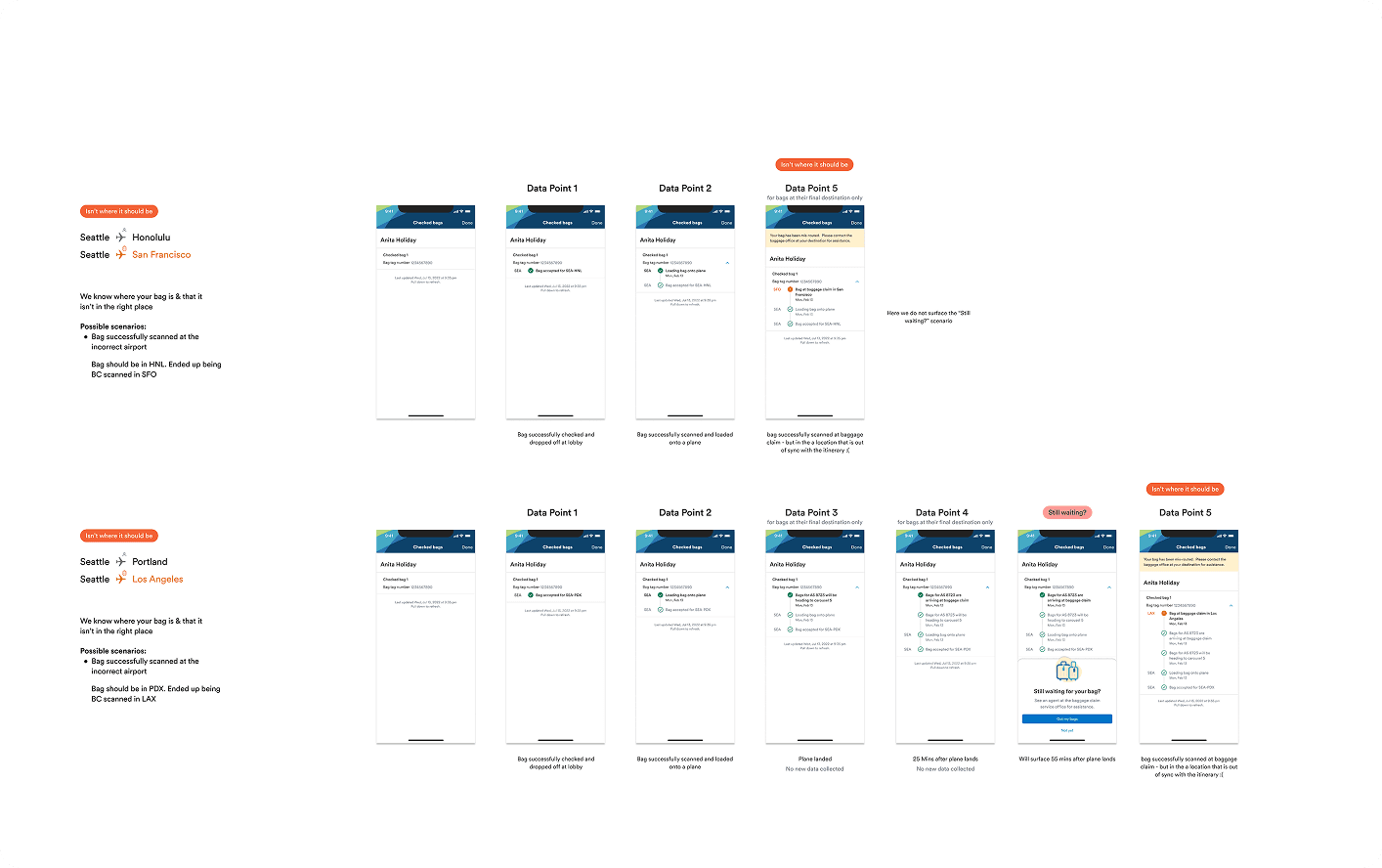
It was decided that although Blue Sky concepts were the best guest experience and did indeed exemplify CARE standards, there was push back in making operational changes for a feature that was not contributing at the time to much revenue growth. With this feedback, my Product Leadership decided to deliver an MVP that included current data points collected by our operation, and show this information to our guests. Future data collection would need to be added in as executives saw fit for the business. A key constraint was data: operations only captures certain bag “scan” events at limited moments in the journey, and those scan points were the only signals available for the MVP. The work focused on making these updates feel as clear and reassuring as possible through UI and copy, reducing guest stress without requiring operational change.



Post-Handoff Feedback
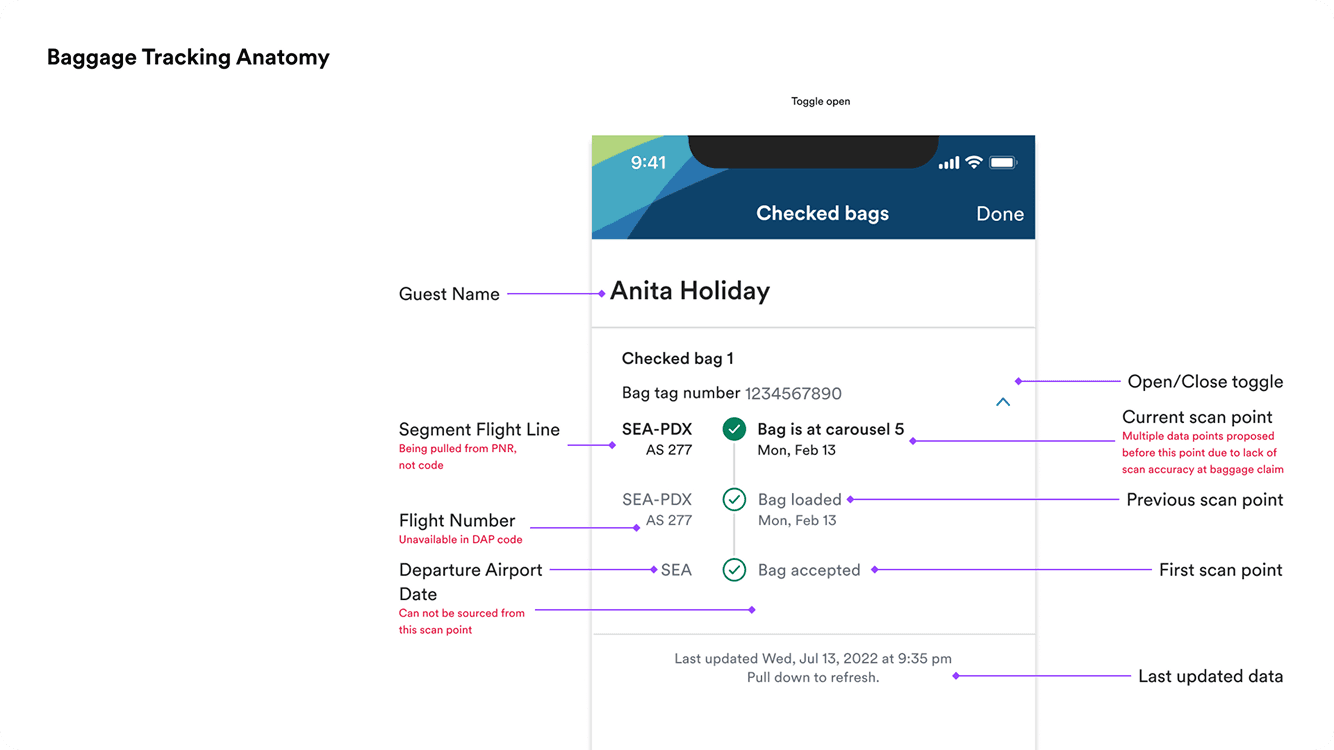
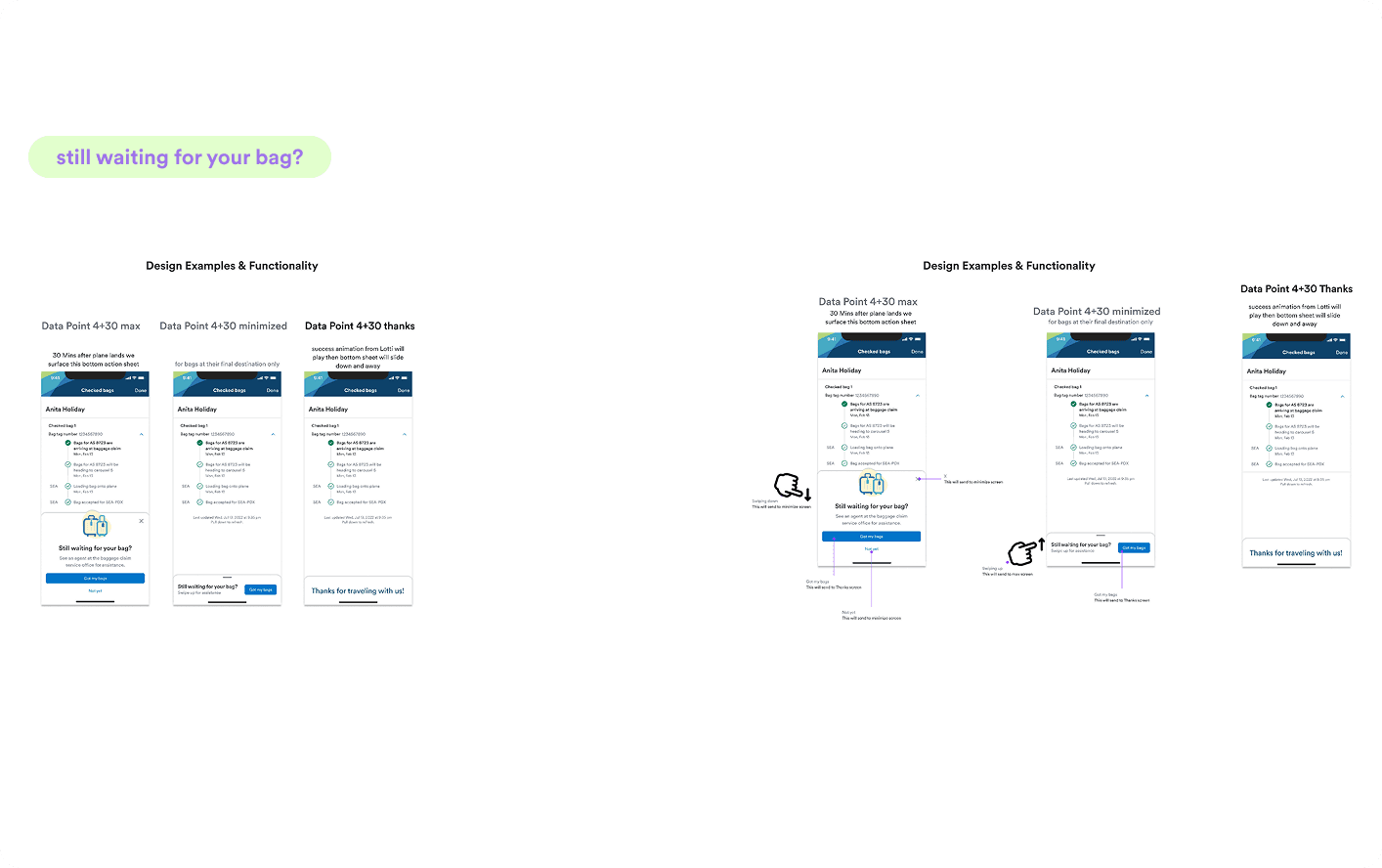
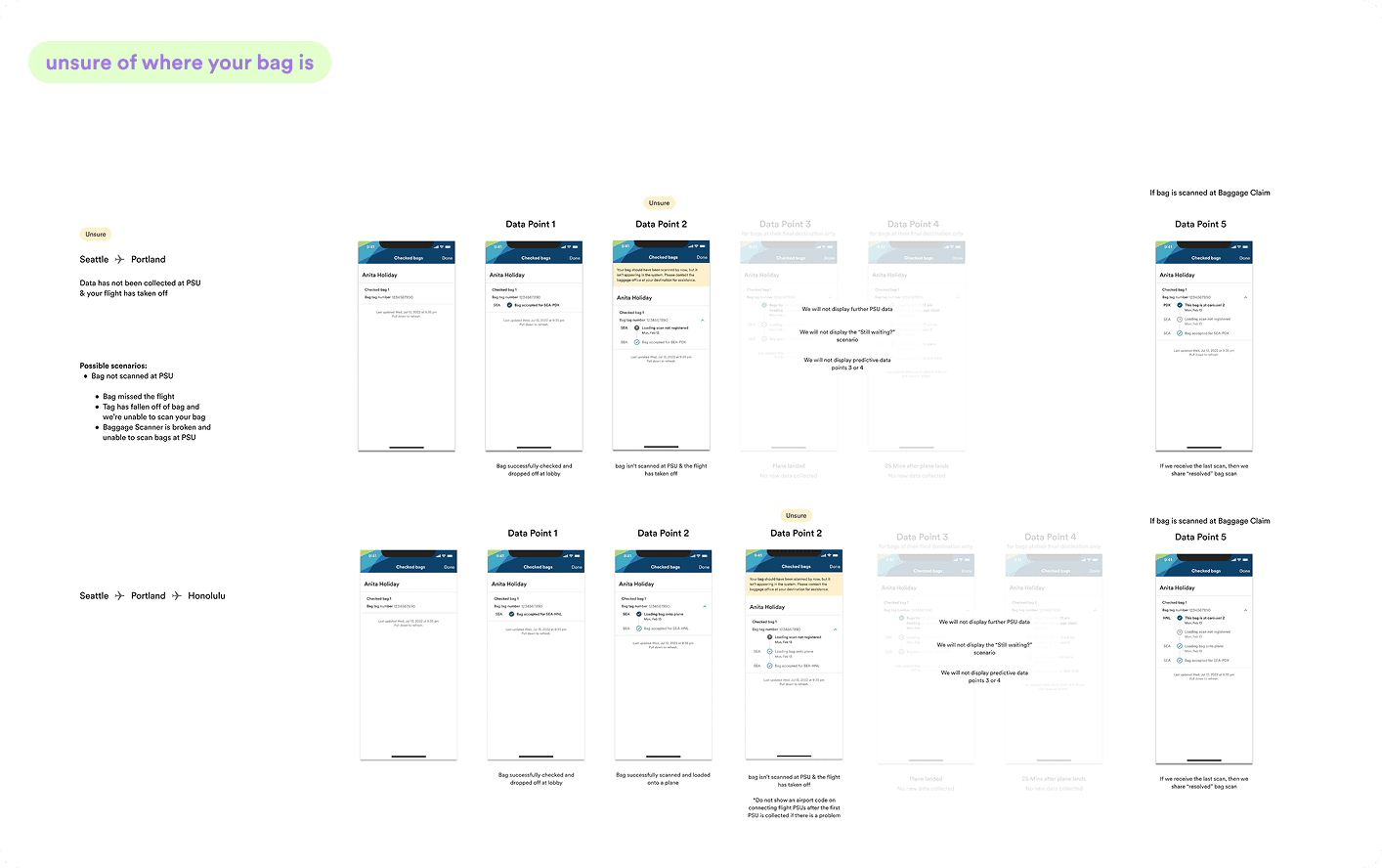
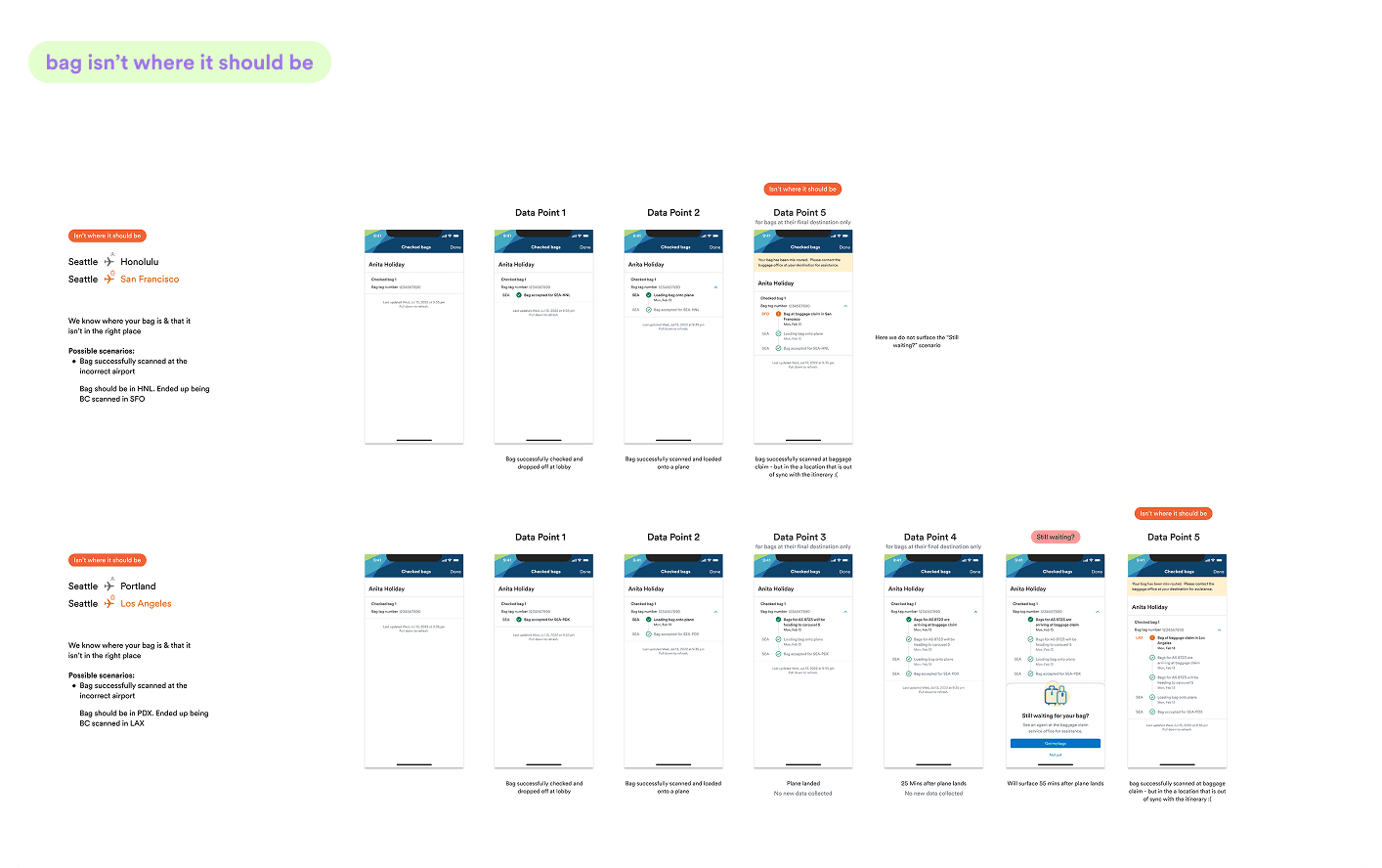
After the initial handoff, we received feedback from internal partners that some of the data we planned to use in the MVP was either unavailable or unreliable for supporting both the happy path and exception cases. One example was data pulled from the PNR (Passenger Name Record), which can change over time and is better suited as a behind-the-scenes validation signal rather than a guest-facing source of truth. This input prompted us to revisit the data model and UI, narrowing the experience to only the most stable scan-based events and adjusting messaging to maintain clarity and trust.


Next Steps
In Q4 2023, we planned to launch an internal pilot with Alaska employees to validate the MVP and understand what is and is not working before expanding to guests. A lightweight study would run alongside the test to capture qualitative feedback and measure whether the tracking updates feel clear, trustworthy, and helpful across both normal and disrupted journeys. Looking ahead, the next step is partnering with infrastructure teams to expand the number and reliability of bag scan points, enabling a more detailed and industry-leading tracking experience over time.